

Buying a car is a major financial commitment, especially when you finance most of the purchase price. One issue many drivers do not expect is that a vehicle can lose value faster than the loan balance falls. If the car is totaled or stolen, your regular auto insurance may pay less than what you still owe the lender.
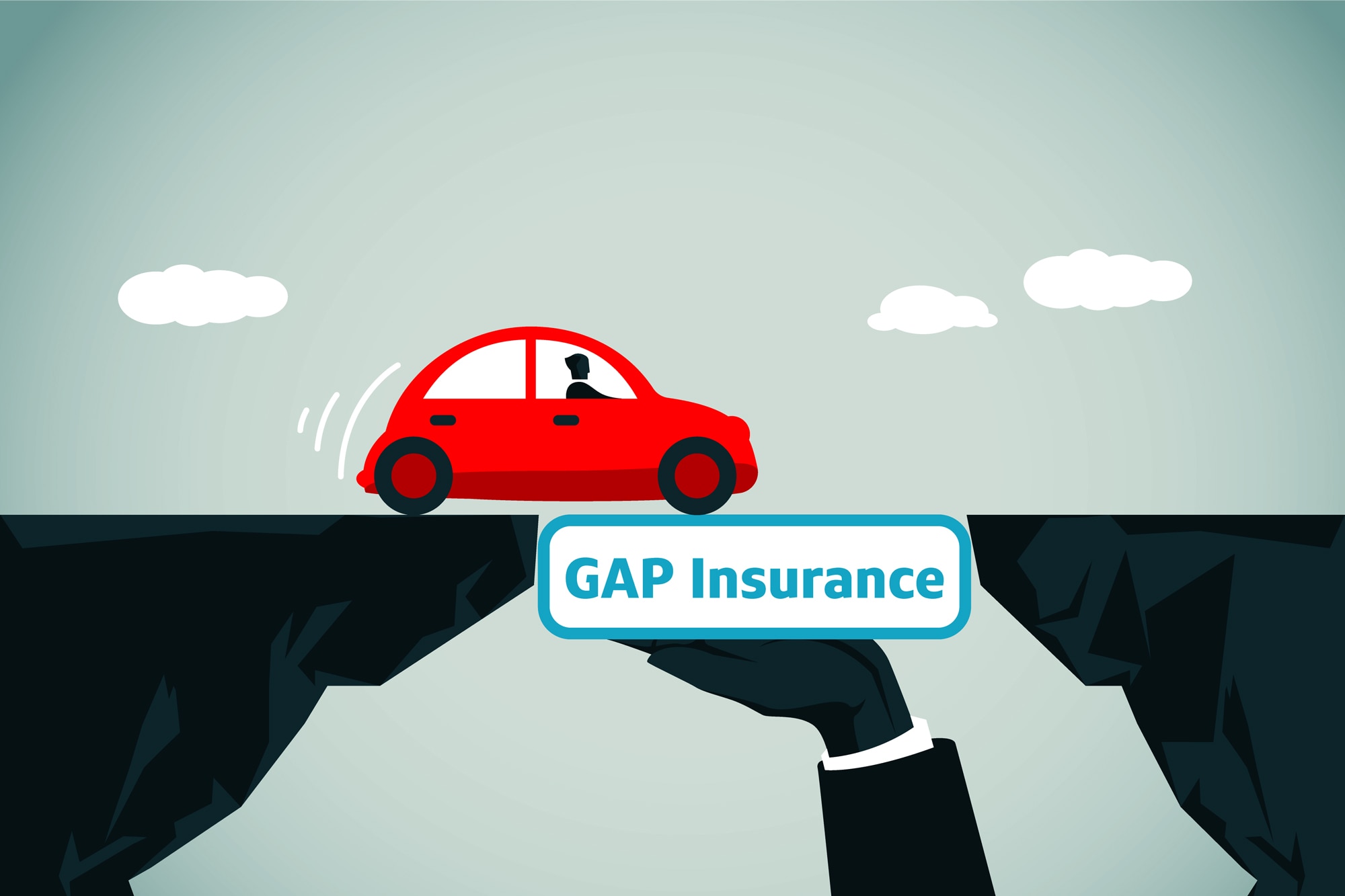
So, what is gap insurance and why might you need it? GAP insurance, or Guaranteed Asset Protection, is an optional type of coverage designed to cover some or all of the difference between your vehicle’s value and the remaining balance on your auto loan or lease.
Understanding how it works can help you decide whether the extra cost makes sense for your situation.
What Is Gap Insurance and How Does It Work?
GAP insurance helps protect you from negative equity on a financed or leased vehicle.
When a car is totaled in an accident or stolen and not recovered, your standard auto insurance generally pays based on the vehicle’s value, subject to your policy and deductible. However, your loan balance may be higher than that value.
For example, imagine you owe $25,000 on your car when it is totaled. Your auto insurer determines that the vehicle is worth $20,000. If your policy pays $20,000, you could still owe the lender $5,000, depending on the policy and other adjustments.
GAP coverage is designed to address that shortfall.
However, coverage varies by contract. Some GAP products may not cover every amount you owe, so it is important to read the terms before purchasing.
Why Can You Owe More Than Your Car Is Worth?
The main reason is vehicle depreciation.
Most new vehicles lose value after purchase. At the same time, your loan balance decreases according to your payment schedule. During the early part of a loan, a significant portion of each payment may go toward interest rather than reducing the principal.
This can create a gap between:
- Your vehicle’s current market value
- The amount remaining on your auto loan
A large down payment can reduce this risk because you begin with more equity in the vehicle. In contrast, a small down payment can make negative equity more likely.
Long loan terms can also increase the period during which you may owe more than the car is worth.
When Does GAP Insurance Pay?
GAP coverage generally becomes relevant when your vehicle is considered a total loss or is stolen and not recovered.
A total loss can happen after a serious collision, fire, flood, or another covered event. Your regular auto insurance normally handles the covered vehicle loss first. GAP coverage may then address the remaining eligible balance.
The basic process usually looks like this:
- Your vehicle is declared a total loss.
- Your auto insurer calculates its covered value.
- The insurer pays the applicable amount.
- You compare that payment with your remaining loan or lease balance.
- GAP coverage may pay some or all of the eligible difference.
Your deductible and certain charges may not be covered, depending on the GAP agreement.
Because policies differ, never assume that GAP will automatically pay every dollar remaining on your loan.
Who Should Consider GAP Insurance?
GAP coverage may be worth considering if you have a higher risk of being upside down on your car loan.
You might want to look more closely at GAP if you:
Made a Small Down Payment
If you financed almost the entire purchase price, you may have little initial equity. This can make it easier for your loan balance to exceed the vehicle’s value.
Chose a Long Auto Loan
Loans lasting 60, 72, or 84 months can take longer to build equity. Your vehicle may depreciate faster than you pay down the loan, particularly during the first years.
Bought a Vehicle That Depreciates Quickly
Some vehicles lose value faster than others. Faster depreciation can increase the potential gap between the car’s value and your loan balance.
Rolled Previous Debt Into the New Loan
If you traded in a vehicle with negative equity and added the unpaid amount to your new loan, your starting balance may be significantly higher than the new vehicle’s value.
Financed a Large Percentage of the Purchase Price
The more you borrow compared with the vehicle’s value, the greater your potential exposure if the car becomes a total loss.
Who May Not Need GAP Coverage?
GAP is not automatically necessary for every driver.
If you made a substantial down payment and your vehicle has already built significant equity, the potential gap may be small or nonexistent.
You should also check whether your existing insurance policy, lender, or lease agreement already provides some form of protection. Some lenders and insurers offer GAP products separately, and terms and prices can differ.
Before buying coverage, compare the cost with your current loan balance and vehicle value.
How Much Does GAP Insurance Cost?
There is no single price for GAP coverage.
The cost depends on factors such as the provider, vehicle, loan or lease arrangement, and coverage terms. You may encounter GAP coverage through a dealership, lender, credit union, or insurance company.
A dealership may offer GAP as an add-on when you finance your car. If you include its cost in the loan, you can also end up paying interest on that added amount over the life of the loan.
For that reason, compare the total cost rather than focusing only on a small increase in your monthly payment.
Is GAP Insurance Required?
In most situations, GAP insurance is optional.
Your lender may require collision and comprehensive coverage to protect the vehicle, but that does not automatically mean you must purchase GAP coverage.
If a dealer or lender says GAP is required, review your loan agreement carefully and ask for clarification about the requirement.
It is also important to understand the difference between required auto insurance and GAP coverage. Regular car insurance protects against covered damage or loss, while GAP is designed to help with the difference between the vehicle’s value and certain remaining loan or lease amounts.
Where Can You Buy GAP Insurance?
There are several potential sources.
You may be offered GAP coverage by:
- Your car dealership
- Your auto insurance company
- A bank or credit union
- Another lender or finance provider
Do not assume the dealership’s offer is the only option. Compare prices, coverage limits, exclusions, and cancellation policies before making a decision.
Also, check whether your insurer already offers a similar product before paying for dealer-provided coverage.
What Does GAP Insurance Not Cover?
GAP coverage is not a replacement for regular car insurance.
It generally does not cover routine repairs, maintenance, mechanical breakdowns, or damage that is not covered under the applicable primary insurance policy.
More importantly, GAP contracts can have exclusions and eligibility requirements. Some products may have limits on the amount they will pay or may cover only certain portions of the remaining balance.
Therefore, read the agreement carefully and ask questions about:
- Coverage limits
- Deductibles
- Exclusions
- Eligibility requirements
- Maximum loan-to-value limits
- Cancellation rules
- Refund policies
Understanding these details can prevent unpleasant surprises if you ever need to make a claim.
Can You Cancel GAP Insurance?
In many cases, yes. The exact cancellation and refund rules depend on the agreement and applicable laws.
You may be able to cancel GAP coverage if you sell the vehicle, refinance the loan, or pay off the loan early. However, the specific terms of your agreement determine whether you qualify for a refund.
If you recently paid off your loan, sold your vehicle, or refinanced, review your contract and contact the GAP provider to determine whether you are eligible for a refund.
How to Decide If GAP Insurance Is Worth It
The best way to evaluate GAP coverage is to consider your financial risk.
Start by finding out how much you currently owe on the vehicle. Then estimate its current value using a reliable vehicle valuation source.
If you owe considerably more than the car is worth, GAP may offer useful protection.
On the other hand, if you have substantial equity, the potential benefit may be limited.
You should also compare the GAP price from different providers. Look beyond the monthly payment and consider the total cost of the coverage.
A Simple Example
Suppose:
- Auto loan balance: $28,000
- Vehicle’s covered value: $23,000
- Potential difference: $5,000
Without GAP protection, you could potentially remain responsible for the eligible difference after the regular insurance settlement.
With qualifying GAP coverage, the policy may cover some or all of that difference, subject to its terms and limitations.
That $5,000 example shows why GAP can be valuable for someone who has significant negative equity.
Final Thoughts
GAP insurance can protect car buyers from an unpleasant financial surprise: owing more on a vehicle than the insurance payout provides after a total loss. It is especially worth considering when you make a small down payment, choose a long loan term, or finance a vehicle that depreciates quickly.
However, GAP is not automatically the right choice for everyone. It is an optional product, and prices, exclusions, limits, and cancellation rules can vary.
Before purchasing, compare your loan balance with your vehicle’s current value and check offers from your insurer, lender, and dealer. Most importantly, read the GAP agreement carefully so you know exactly what it covers.
That simple comparison can help you decide whether the added cost provides meaningful protection for your financial situation.


